Dubai’s 100% Ownership Reform: A New Era for Global Wealth and Corporate Power

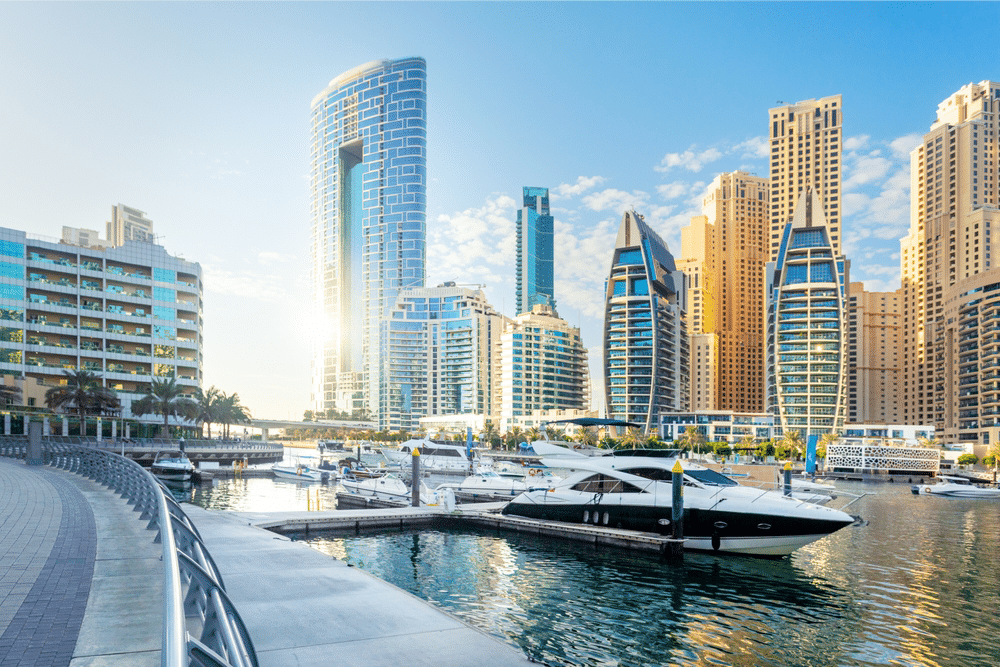
For decades, Dubai has captivated global investors. A city that rose out of the desert to become a hub of commerce, logistics, and luxury, Dubai is not simply another regional market; it is a symbol of ambition realized. With its world-class infrastructure, strategic location, and investor-friendly tax regime, it has long been a magnet for capital. Yet for many CEOs and ultra-high-net-worth individuals (UHNWIs), there was always one immovable obstacle: full control of a mainland business was off-limits.
Until recently, foreign investors could own only 49% of a mainland company in Dubai. The remaining 51% had to be held by a local Emirati sponsor. Free zones provided an alternative, granting 100% foreign ownership, but with trade-offs. Free zone companies could not operate freely across the UAE’s domestic market; they were often restricted to international business or required to appoint a local distributor.
In mid-2021, the UAE shifted course dramatically. Amendments to the Commercial Companies Law swept away the 51% local ownership requirement for most industries, opening the mainland to full foreign control. For investors, this was not just a regulatory change — it was a liberation.
Why This Matters to the Global Elite
At first glance, the reform may seem like a legal technicality. But for those who control billions in capital, the implications are profound. Ownership is power. The ability to hold 100% equity in a Dubai mainland company eliminates the compromises of joint partnerships and returns decision-making authority to the investor.
For HNWIs managing family offices, the reform allows for clearer succession planning and wealth preservation. Assets can now be structured through Dubai entities without mandatory local dilution, ensuring tighter control over governance and inheritance strategies.
For Fortune 500 corporations, it changes the calculus of regional expansion. Dubai was already a launchpad for entering the Middle East, Africa, and South Asia; with full ownership rights, multinationals can establish stronger operational headquarters, open retail outlets, and contract directly with government entities.
Sectors of Opportunity
Full ownership is now permitted across most commercial and industrial activities. Technology firms, e-commerce ventures, consulting companies, manufacturers, and service providers can all operate without Emirati majority partners.
Strategic sectors — such as energy, defense, or heavily regulated financial services — remain exceptions, where local participation is still mandated. But for the vast majority of industries, the gates have been opened.
Free zones continue to thrive as specialized hubs for logistics, finance, healthcare, and media. They remain attractive for international trading firms, holding companies, and startups seeking fast-track incorporation. Yet the real breakthrough lies in the mainland, where companies can now combine 100% foreign ownership with unrestricted access to the UAE domestic market.
The Strategic Choice: Mainland vs. Free Zone
Investors now face a strategic decision.
- Mainland companies allow operations across the UAE with no restrictions. This means retail presence, government tenders, hiring flexibility, and freedom to scale domestically. For businesses that require local customer engagement or physical presence, this is the superior option.
- Free zone companies remain powerful tools for cross-border trade, tax optimization, and niche industry clustering. They are particularly effective for global firms that prioritize international markets over UAE domestic business.
In practice, many global investors now use a hybrid model: a mainland entity for domestic activity and a free zone structure for international operations.
Implications for Wealth Strategy
The reform is especially significant for HNWIs. Wealth is not just about returns; it is about preservation and influence. Dubai’s new ownership rules provide an additional layer of sovereignty for private capital.
Family offices can structure investments with clearer control. Venture capitalists can establish funds anchored in Dubai without local dilution. UHNWIs can use Dubai entities as vehicles for real estate, private equity, and cross-border asset management.
The reputational impact is equally important. For many global leaders, presence in Dubai signals not just financial strategy but status. Owning a business outright in one of the world’s most prestigious financial hubs is itself a marker of influence.
A Wider Global Context
This reform places Dubai in direct competition with other global hubs such as Singapore, London, and Hong Kong. Each of these cities has long attracted foreign investors, but Dubai’s unique combination of zero income tax, global connectivity, and now full ownership makes it especially compelling.
For investors in Europe or Asia facing higher regulatory burdens, Dubai offers not only capital efficiency but also lifestyle advantages — a safe, cosmopolitan environment, elite education, and unrivaled luxury infrastructure.
Dubai’s elimination of the 51% local sponsor rule is not a footnote in regulatory history; it is a turning point in the global investment landscape. It transforms Dubai from a gateway city into a jurisdiction of true control. For HNWIs, family offices, and Fortune 500 leaders, it offers both opportunity and security: the ability to own outright, operate freely, and expand globally from one of the world’s most dynamic economies.
The message is clear: the era of compromise is over; the era of complete ownership has begun.
Have you read?
The Citizenship by Investment (CBI) Index evaluates the performance of the 11 nations currently offering operational Citizenship By Investment (CBI) programs: St Kitts and Nevis (Saint Kitts and Nevis), Dominica, Grenada, Saint Lucia (St. Lucia), Antigua & Barbuda, Nauru, Vanuatu, Türkiye (Turkey), São Tomé and Príncipe, Jordan, and Egypt.
Copyright 2025 The Chief Economists Magazine. All rights reserved. This material (and any extract from it) must not be copied, redistributed, or placed on any website without Chief Economists Magazine's prior written consent. For media queries, please contact: info@chiefeconomists.com